Dental implants are a life changing treatment for a lot of people, and they are the closest thing to replacing natural teeth.
Many people think that once they are fitted, that is the end of the story, and for a lot of people, it is, but they do require care and attention, and occasionally bad things can happen.
Here are a list of a few (less common) things that can happen with dental implants.
Screw or crown loosening
Screw or crown loosening can happen in a matter of hours or days of the implant being placed. There is typically no pain although it can hurt to bite. More often than not, this is a quick fix and requires the internal screw within the implant to be simply tightened up. The make or brand of your implant is the most important information required by the dentist who is tightening the implant. This assists the dentist with identifying which brand specific tool to use to tighten it.
The other thing that changes the way a dentist may deal with your screw or crown loosening is whether your implant is screw retained or glued.
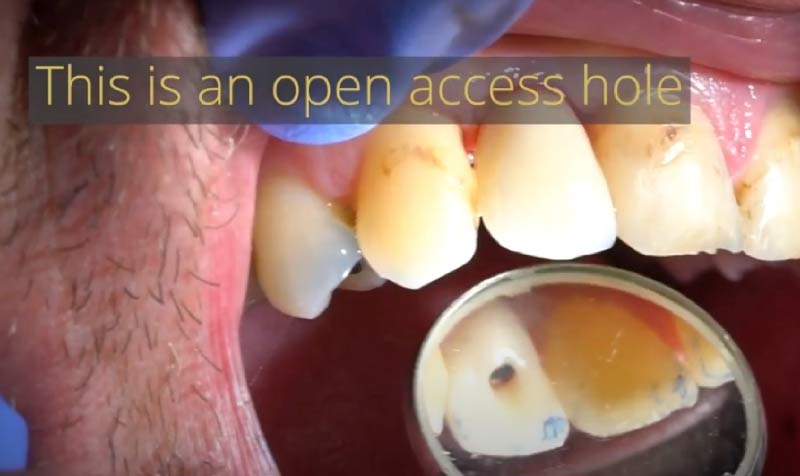
In this image we have a screw retained implant where the white filling material covering the screw head has been removed to reveal the implant screw.
Once it has been tightened, the access hole is re-covered with white filling material.
Where it is glued, there is no real way of knowing where to gain access to the screw. This often means that the crown part of the implant must be removed and remade, incurring a significant cost.
Gum infections and gum problems
Gum infections and gum problems happen around implants in the same way that they happen around natural teeth. Gum disease is by far the most common dental condition leading to tooth loss.
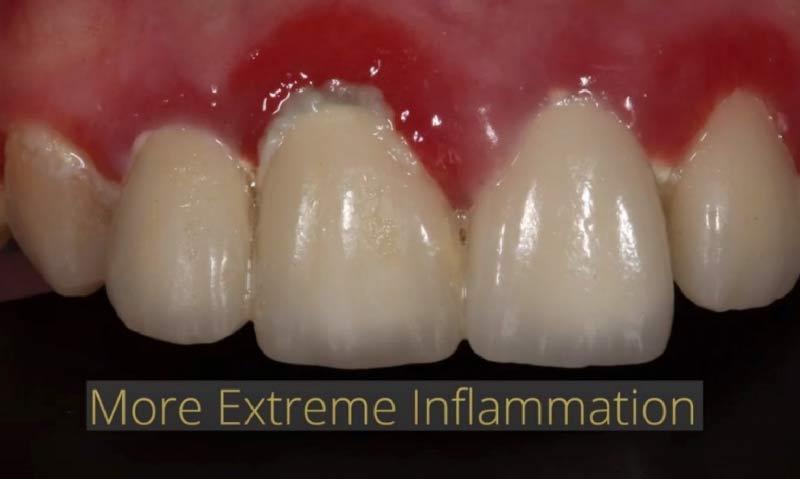
Normally, gum disease starts with bleeding and / or inflamed gums as your body tries to fight this low-grade infection. It does not usually hurt in the early stages.
This low-grade infection could be caused by a screw loosening. After some time and left untreated, the screw loosening creates a tiny space under the gum where bacteria gets trapped and toxins are released, making the gums red and inflamed.
In these situations, the treatment is almost the same as if we had gum disease on one of our natural teeth.
Dental implants can get gum disease, and we call this something slightly different, peri-implantitis. This is bone loss around a dental implant, and this is often a big problem if it starts.
Implant surfaces are designed to be extremely rough to help the bone attach to the implant.
If there is gum disease around an implant, then this can expose this rough surface, and this is an excellent breeding ground for bacteria.
If this happens, then there are ways to clean and smooth the surface of the implant, therefore making it easier to clean.
Diffuse swelling
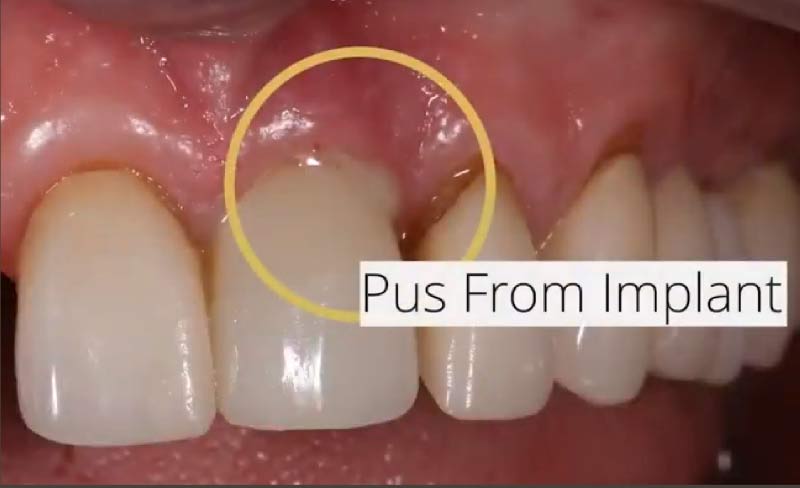
Diffuse swelling is where previously localised swelling spreads out. This can often be painless. Sometimes you might see white or cream puss coming out from between the gum and the implant tooth as with the image below.
At this stage there is a significant problem and you should not hesitate in calling your dentist to be seen as quickly as possible.
It could be a simple case of taking the tooth off, cleaning the area and taking antibiotics to resolve the problem.
Bone loss
Bone loss can unfortunately lead to implant loss if left untreated. Bone is what holds your implant in your mouth, the same as your natural teeth. As soon as you start losing bone around a natural tooth, it becomes more and more difficult to keep it.
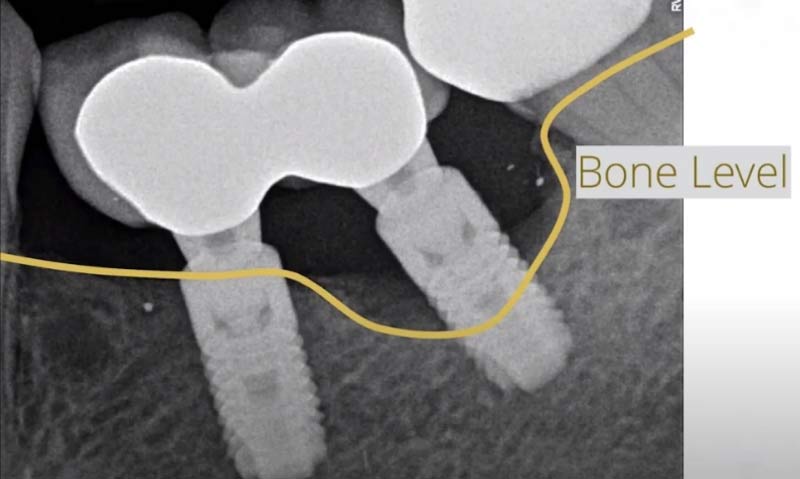
In this case, you will probably feel pain only once an implant is loose in the bone. You will be able to move the whole implant tooth in the bone and it will eventually come out.
Once this happens, the best treatment is to ensure the implant has been fully removed and the site left to heal. After healing, consideration can be given to placing a new implant. There are things that we can do to help minimise the future loss of the bone around the implant, including bone grafting which we will discuss in more detail in another blog.
Book Your Free Consultation
Find out more about Dental Implants by booking a consultation.


