

If you are considering all on 4 treatment, then thinking about the materials that you can have is probably a big consideration – but what are the differences in real terms?
Zirconia is the strongest, and you might think that its the ultimate material.
Although I do think its the best material, not all Zirconia is the same… Let me explain
Quick Summary of the Materials
Acrylic: This is a slightly older material, it looks fantastic (you can see a lot of acrylic cases on my Instagram page). But it has a problem for some people.
The teeth can snap off. This doesn’t happen often, but when it does, its very frustrating and makes patients feel like: “I paid so much money, why are the teeth pinging off?”

These can be repaired, but this can sometimes mean sending them away, going back into your temporary teeth, and another appointment to fit the repaired teeth.
These repairs are often chargeable, which no one likes!
After 5-8 years, the bridges may need to be completely refurbished. This means, stripping everything off them, and resetting the acrylic and teeth. This is needed as the plastic teeth wear, then the front teeth take more load and start snaping more often.
This will cost a significant amount of money.
PMMA: You can think of PMMA as a hard plastic. This can be designed on a computer (there are advantages of this, I will explain in a bit…) and PMMA is milled from a solid block.
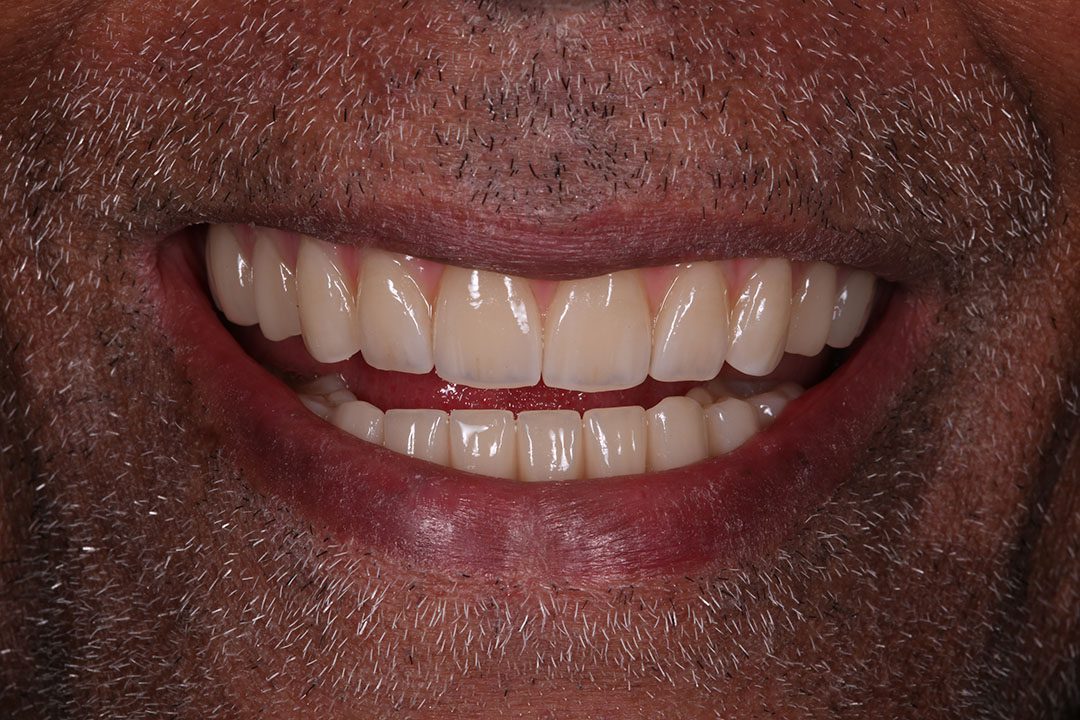
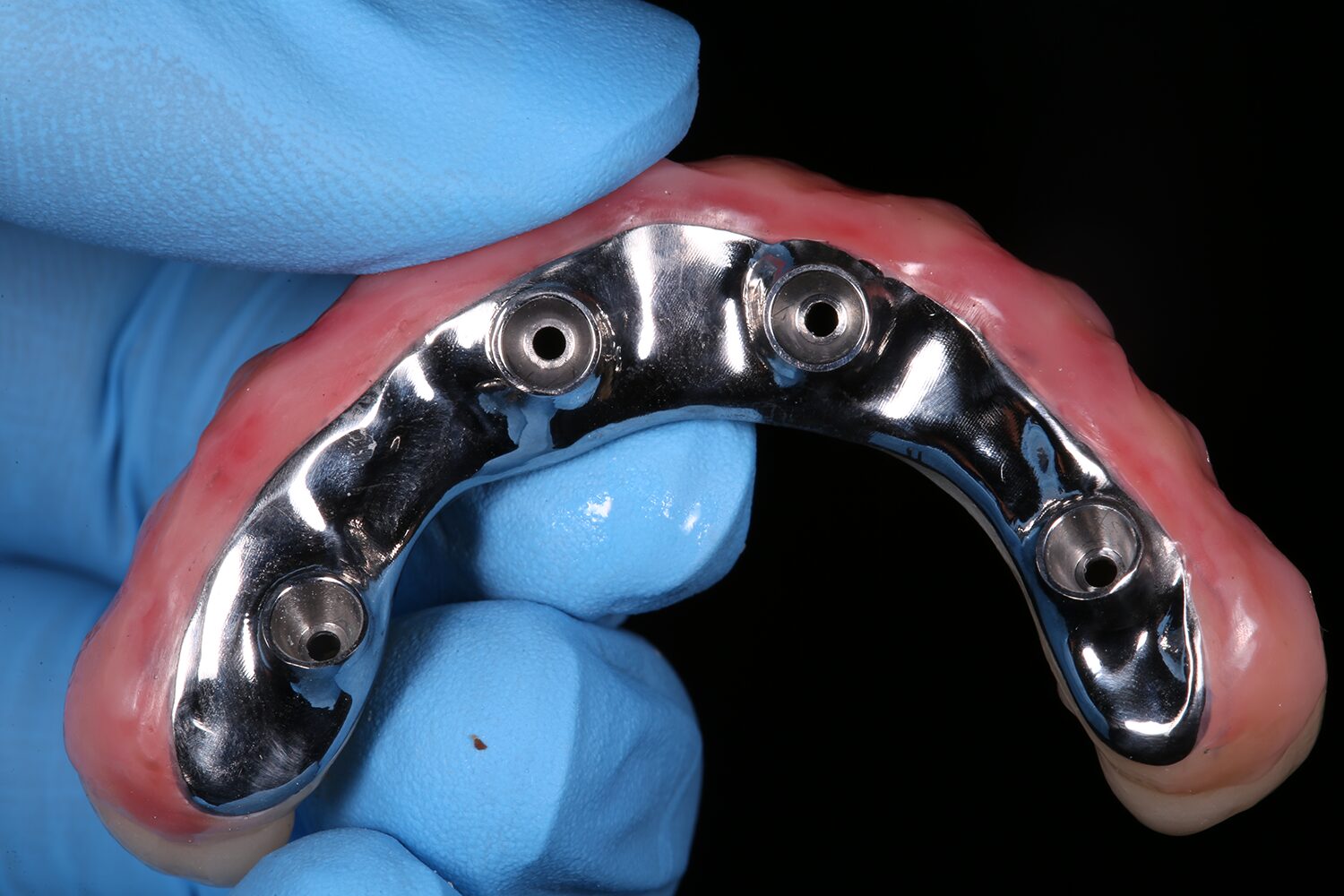 On its own, PMMA is not strong enough for a permanent set of teeth, but if it is strengthened with a metal bar, then this material is strong.
Over time, it may wear less than acrylic, but it is plastic, so there is potential for wear.
Remember it was stored as a computer model? Well, this has the advantage in that if it did need refurbishment, then its a simpler process, a new block can be milled (kind of like printing), then the colours and polishing is done, and its ready to fit to your old bar. This would be cheaper than refurbishing an acrylic all on 4.
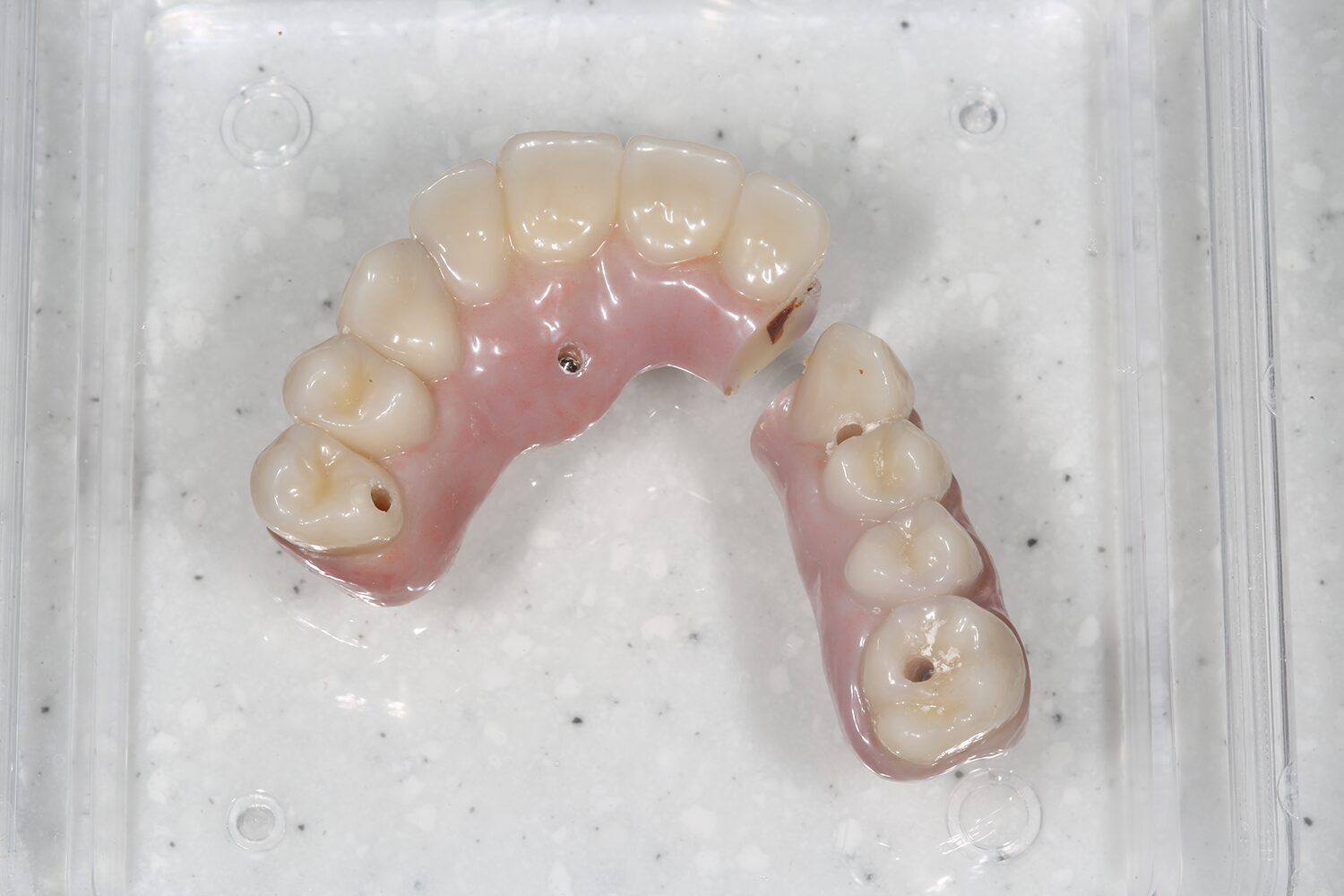
Zirconia: Most people will tell you that this is the strongest, and it is, but on its own (the way that most people will make it), its not strong enough. Here is one that has broken – this would not have happened, if there was a metal bar inside it, like our preferred way to make these teeth.
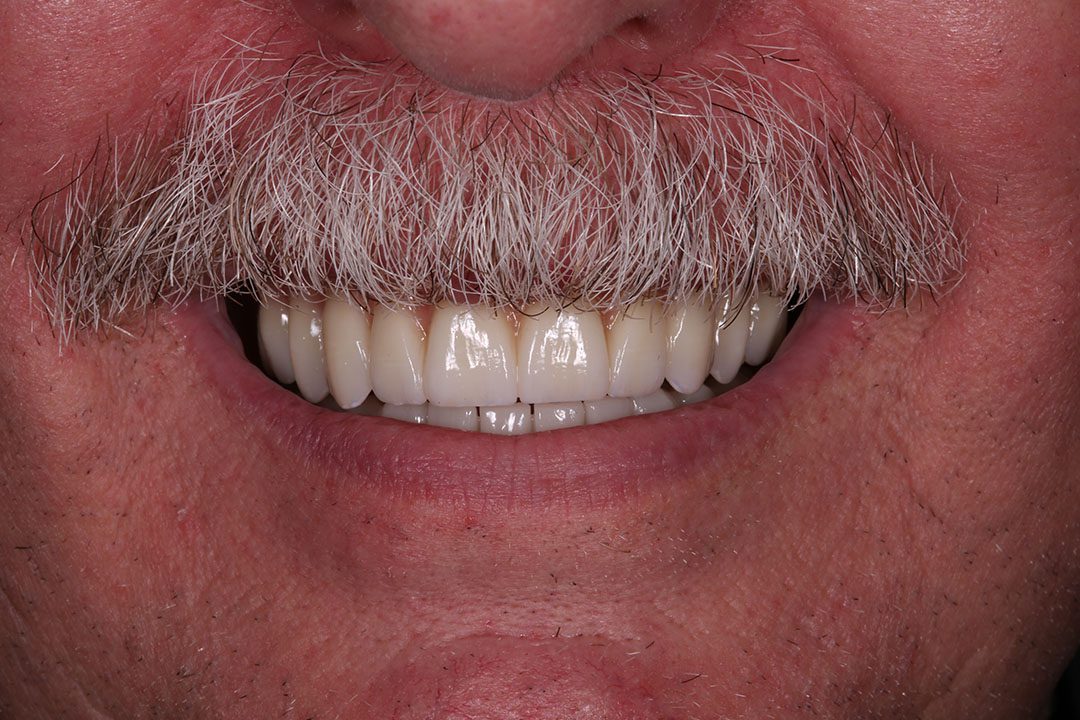
 Also, there is a big variation on how abrasive the Zirconia is. Cheap zirconia’s are very abrasive, and this will cause premature tooth wear to the opposing teeth.
Like the PMMA, the zirconia is designed on a computer, and if it was to break, it can easily be remade. (so far we have not had a zirconia with a metal bar fracture.
So, Zirconia is the best – right?
Yes, but it has a downside – the cost.
The better quality zirconia bridges are expensive, and most places that advertise that they do zirconia bridges do not use the high quality zirconia, making it abrasive and destructive to the opposing teeth.
In addition to this, the dentist needs to take great care to shape the biting surface of the teeth so that biting forces are kept as balanced as possible.
This is a complex subject, and hard to describe in text and graphics, but in essence, everyone has a unique bite.
These bite patterns will have different shapes to the teeth, so if the teeth are not shaped correctly, they will put extra force on the opposing teeth, and cause premature wear.
Materials like PMMA and Graphite reinforced PMMA (Graphene) are closing the gap to zirconia, and reducing the cost.
Ultimately, I would argue that the material does not matter as much as you may think.
If the design of the teeth isn’t right, if they are too long, or the midline is out, then this is a bigger issue, rather than the material.
The material matters in terms of the upkeep. There are less long term issues with zirconia and PMMA can pick up stains more readily than zirconia.
From a biocompatibility point of view, the best materials to contact your gums are (unglazed) zirconia, or titanium. This is another reason to have a metal bar, as it will be the titanium that is fully in contact with the gum, rather than the PMMA itself.
When we used acrylic, then this would be in contact with the gum, and at regular reviews, we can see slightly more inflammation in the gums, when compared with Zirconia and Titanium that we use these days.
If you would like to speak to someone on our team about these treatments, pop in your details below and we will be in touch.
Book Your Free Consultation
Find out more about Dental Implants for single teeth by booking a consultation below.


I’ve had 6 on 6 dental implants. Presently got pmma dentures. Top and bottom. I can’t get used to them in my mouth. All I think about is taking them out. My dentist says I’ve got to adapt. I can’t. It’s been 9 weeks now. I’m thinking of having everything out and just being toothless. This feeling in my mouth is driving me crazy. Do you have any advice. Thanks.
Hi Alison, I’m sorry to hear this- if you were better with the temps, then it should be possible to get to a point where you are happy – for some people this takes a bit of time. I had one lady, where we spent about 4 months, trying to get the bite right, so that she could forget about her teeth. It always felt like some of the implants were aching, and this pain came on a few days after the bite adjustments.
I read your other comment about taking implants out, and I would suggest maybe removing the teeth, and just having the implants for a week, to be sure that it is the implants or the teeth that are causing the problems.